I was doing some reading over the foods that our family generally consumes and came across these interesting facts. Hopefully, they are helpful to you, the audience, but please do your own research.
Wait one or two hours after waking up to have the first cup of coffee. Coffee in the morning on an empty stomach can help us feel more alert and energetic right away. That’s because it increases the cortisol level which is already high after waking up. However, after the initial spike following a cup of coffee, our body will need to normalize the cortisol level during the day and as a result, we will feel more tired and drowsy in the afternoon. Aka, the energy level will drop more sharply. Personally, I feel better with a smoother energy curve throughout the day. It is hard at first, but you’ll get used to it.
Pasture raised eggs have the best nutritients, but there is more to it. Eggs are an excellent source of protein and amino acids. There are more than one kind of eggs sold at grocery stores: caged, cage-free, free range and pasteur raised. Caged agges never get to see the light of day. They barely have room for themselves. Cage-free and free range hens live in a slightly better environment, but do not have room to roam and frankly be chickens. Pasteur raised hens get to be chickens most of the day. Research shows that pasteur raised eggs have more nutritional values than eggs from conventionally raised hens. However, among pasteur raised eggs, there is a difference between eggs from hens on a corn-and-soybean-free diet and those from hens that have corn and soybean in feed. Specifically, hens that have soybean and corn in their feed have higher omega-6-to-omega-3 ratio; which can lead to inflammation and other health side effects. I get that healthier eggs are expensive. If you can’t afford them, you can’t afford them. But if you can, it’s not a bad idea to splurge on your health.
Canola oil, good or bad? Canola oil carries a good nutritient profile, with lower saturated fats and similar unsaturated fats than olive oil. Compared to olive oil, though, canola oil does not receive as good a reputation. That’s likely due to two reasons. First, 90% of canola crops from the US and Canada, the largest producer of canola oil in the world, are genetically engineered. Though GMOs are declared safe for consumption, many consumers tend to think otherwise and prefer organic crops. The second reason why canola oil has a negative reputation is that it usually involves chemicals and high heat to extract the oil from the seeds. I cannot blame anyone that thinks that oil which comes from a biologically engineered crop and processed for extraction can be healthy. However, there are cold-pressed NON-GMO canola oil options on the market that can help assuage safety concerns.
A fan of rice? Choose Basmati. Basmati is a rice native to India and Pakistan. It belongs to the long-grain family with fragrant aromas and is available in brown and white color. Compared to other rices, Basmati has a low-to-medium Glycemic Index, which measures how fast and how much a food rasies blood sugar levels after consumption. Additionally, Basmati has more fiber and a lower level of arsenic, a heavy metal harmful to human health that is usually found in rices. The white version of Basmati requires some processing which may strip the grain of its nutritions. Hence, whenever you can, brown Bastmati is a better option.
Grass-fed Milk. According to the American Dairy Association, there are currently no strict standards for the “Grass-fed” label. If the label is on a bottle of milk, it generally means that the milk is from cows that have access to pasture and grass is part of the diet. Some studies published in Plos One and PubMed Central found that grass-fed milk contains more omega 3 and less omega 6m and hence is more healthy than conventional milk. Since grass-fed cows need pasture and access to grass, grass-fed milk tends to be considerably more expensive than conventional milk. Once again, affordability matters, but if you can shell out a few more bucks for the better milk, it’s good to support farmers who give the cows a better life and to drink something that is potentially healthier.
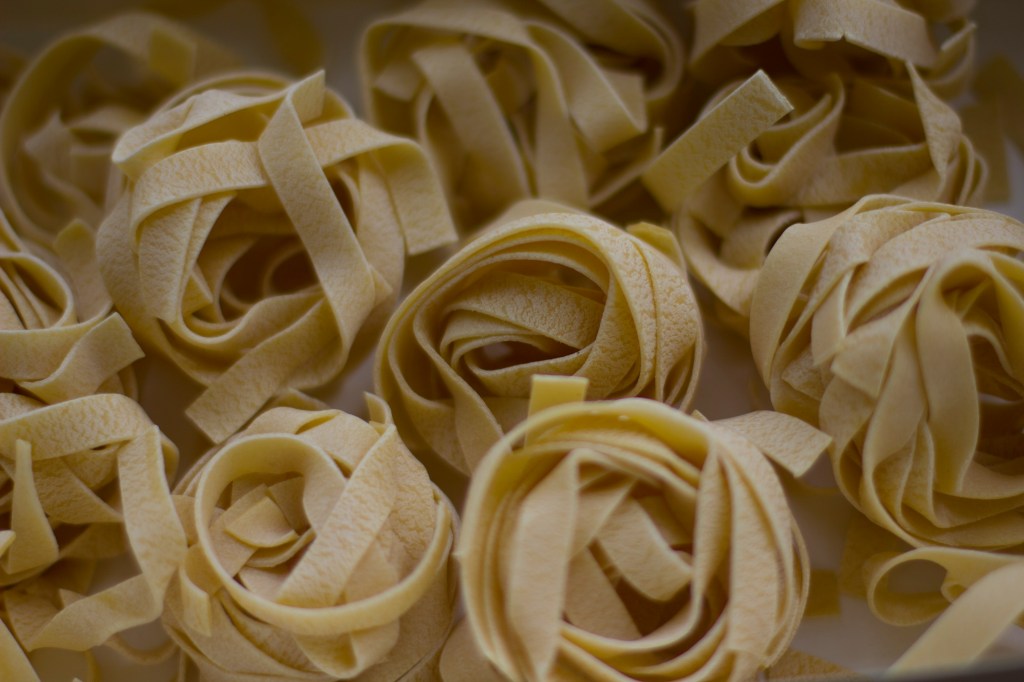
Fan of pasta? Choose slow dried pasta. Pasta is made from semolina flour and water. That’s it. Pasta making involves three steps: kneading, extruding and drying. Obviously, the quality of the ingredients influences the quality of the final product, but in the case of pasta, extrusion and drying also play an important role. Extrusion – pushing the dough through a machine with holes – is said to be better with a traditional bronze disc than a modern machine with a layer of teflon. Once cut, the pasta goes into a drying chamber where the heat and how long the pasta stays in there decide how good the final output is. Traditionally, pasta is slow dried at 60 Celsius degrees for at least 24 hours, if not days. Modern commercial pasta makers increase the heat significantly to cut down the drying time. While efficiency goes up, the quality of the pasta that is fast dried decreases significantly as protein is degraded and the starch becomes harder to digest. In general, fast dried pasta loses its nutrients. Some commercial pasta brands recommended for quality are: Martelli, Garofalo, Mancini, Faella, Rummo and De Cecco.

 Minh Quang Duong
Leave a comment