Business
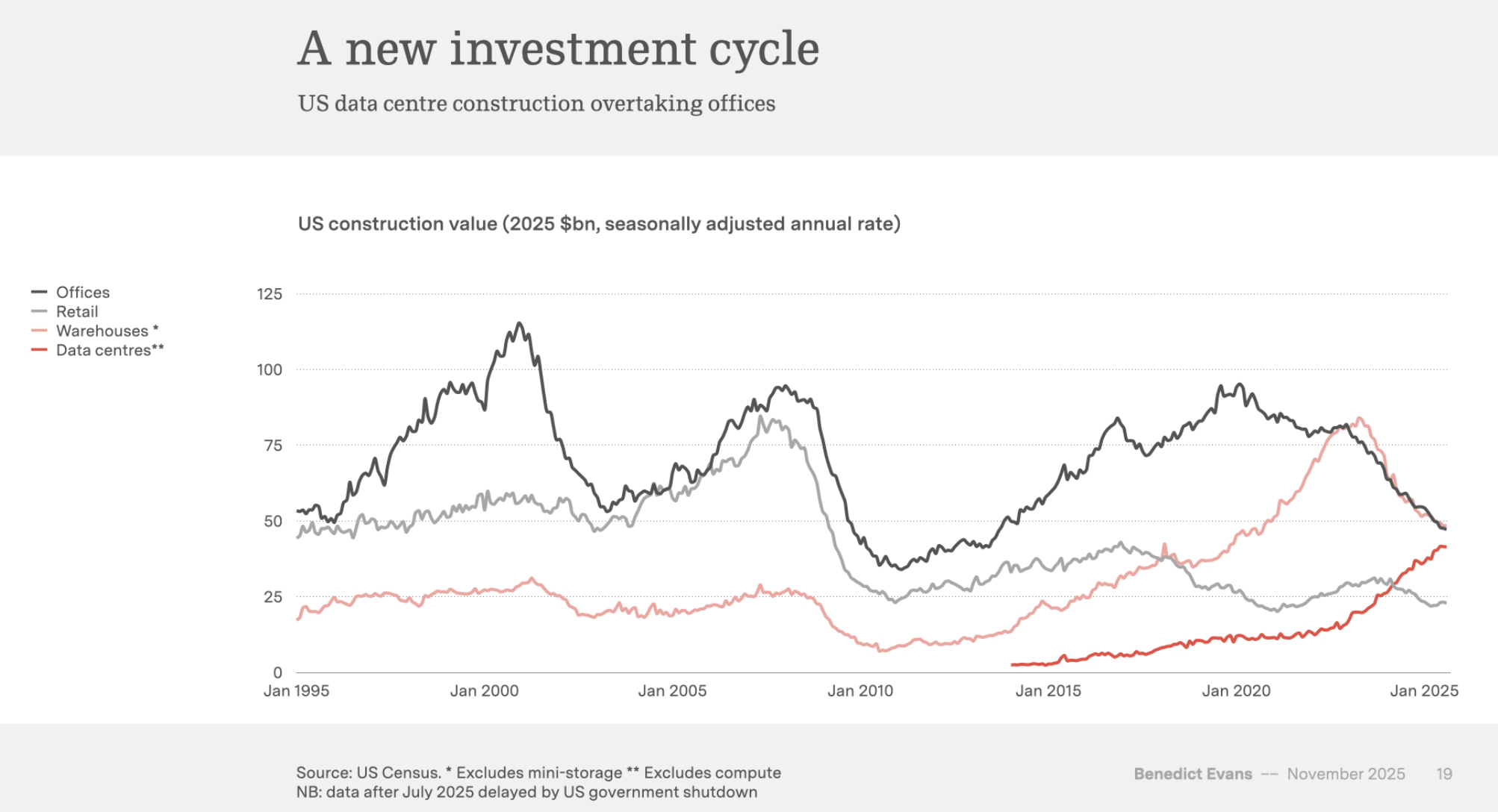
AI Meets Aggressive Accounting at Meta’s Gigantic New Data Center. Very few good things happen when the art of financial engineering is involved. In this case, Meta is blurring and pushing the accounting boundaries to the limit to stay in the AI race and preserve its balance sheet.
Inside Atlanta’s First Government-Funded Supermarket. Unless there is a controlled effort by all grocers and retailers to fix prices, what is the point of having government-funded supermarkets? Prices are determined by supply and demand. The same goes for government-funded stores. They need to reach a scale big enough to obtain negotiating power. But can they do it with the local government funding the bill and taking away the incentive to drive innovation? Even if stores in a state succeed, national stores have even bigger scale and bigger advantage. I am skeptical.
Inside Marriott’s Disastrous Bet on Short-Term Rental Company Sonder. Marriott has only themselves to blame as it did a piss poor due diligence job related to the partnership with Sonder. The hospitality giant must have been motivated to overlook any potential risks when it could boost the room inventory for a not-too-big fee. Because of the focus on short-term gain, the company lost money on the bet and is now marred in legal battles with the insolvent startup. The board should ask questions to the management team and suspend any compensation.
How gas stations can become the best place to charge your EV. “As electric vehicles move ever further from niche toward norm, the focus for retailers like these could shift from who offers the cheapest fuel to who can make waiting for the car to fill up the best experience. The two chains offer a place to plug in at roughly 10 percent of their locations. Wawa has installed more than 210 chargers, while Sheetz provides more than 650 at 95 locations that have logged more than 2 million sessions. Clean amenities and expansive menus with offerings like Wawa’s turkey-stuffed Gobbler and Sheetz’s deep-fried Big Mozz have placed them near the top of convenience store satisfaction rankings. Therein lies the challenge. Buying and installing a quick charger can cost more than $100,000. Beyond that lie fluctuating prices from utility companies, which one leading charging provider said is a key factor in deciding where to locate the devices. Retailers won’t recover that by selling electrons alone, given that the machines might generate just $10,000 in revenue each year. Researchers at the Massachusetts Institute of Technology found that installing an EV charger increased spending by 1 percent, which would cover 11 percent of the cost of installing the charger.“
An Auto Holy Grail: Motors That Don’t Rely on Chinese Rare Earths. “BMW’s electric vehicles already use motors that operate without rare earths. Researchers at Northeastern University and other institutions are working to synthesize materials that have promising magnetic properties and are found only in meteorites. Start-ups have begun developing new kinds of motors and other technologies. And the Department of Energy is encouraging that work, despite the Trump administration’s rollback of other forms of support for electric vehicles.”
Other Stuff I Find Interesting
Tehran’s water crisis is a warning for every thirsty city. It’s unimaginable that people who live in such a hot climate have to put up with a shortage of water. It’s cruel to put your own citizens through that. There is no quick fix for climate change, but the regime in Iran can certainly negotiate for access to water technologies or even quick supply of water. If you are in the position of power, you owe it to your constituents that much. On a general note, cities around the world will have to think of water as a potential crisis, if not an existing one, given climate change and the enormouse use of water by data centers.
Why US Demand For Japanese Matcha Is Straining The $3.5 Billion Industry. The way we classify Japanese matcha in the US is not what the Japanese use.
The Untold Story of Charlie Munger’s Final Years. It’s so inspiring that Charlie stayed a learning machine till the last day of his life. The way that he battled challenges in his life and made friends at old age with folks less than half his age is something that we can all learn from.
TikTok-fueled K-beauty boom triggers a retail race in the U.S. “Once a niche reserved for beauty obsessives, Korean cosmetics — known as K-beauty — are breaking fully into the American mainstream, fueled by TikTok virality, younger and more diverse shoppers, and aggressive expansion from retailers such as Ulta, Sephora, Walmart and Costco. K-beauty sales in the United States are expected to top $2 billion in 2025, up more than 37% from last year, according to market research firm NielsenIQ, far outpacing the broader beauty market’s single-digit growth.”
Stats
Mercedes F1 team is valued at $6 billion, higher than most NBA teams
 Minh Quang Duong
Leave a comment