Business
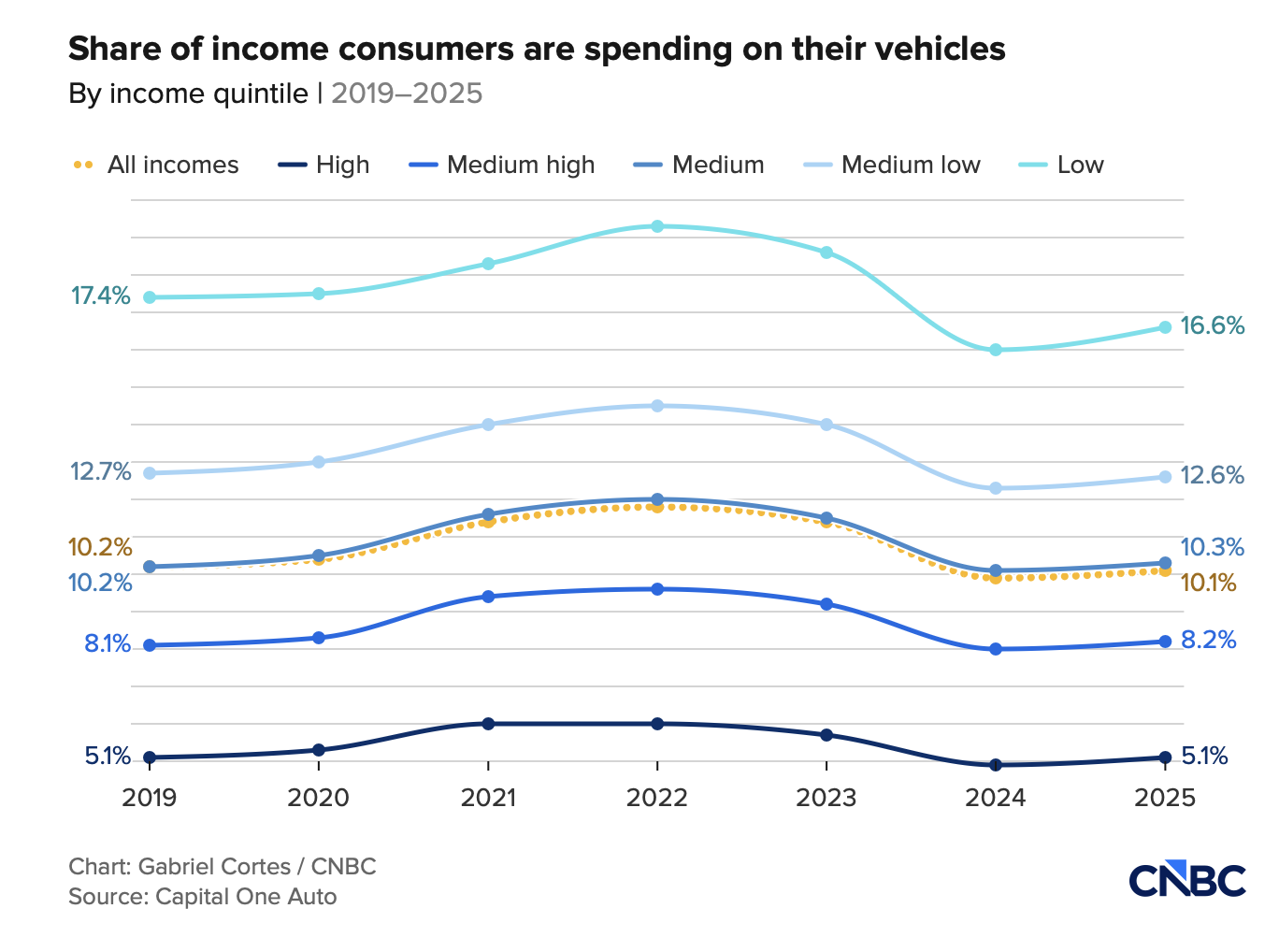
Consumers Lean on a ‘Hamster Wheel’ of Credit to Manage Rising Costs. The war in Iran shows no sign of stopping. As of this writing, the President rejected the proposal from Iran and Israel, another major player in this conflict, already said it would not support a deal. In the meantime, consumers are facing increasing inflation pressure. Everything is going to be expensive, because gas and fertilizers are going up in price. Yes, consumer spending in the US is absolutely phenomenal, but there has to be a limit to where consumer budget can be pushed.
Target is trying to win back busy families from Walmart, starting with the baby aisle. Anecdottally, a professor I studied with had a triplet and she said that the reason she shopped at Target was that it had most of the things she needed so she would not need to make additional trips, and Target had a big enough trolley to fit all her kids. I am surprised to learn that Target’s leadership just realized that recently. Revamping the baby section is a great step in the right direction, but there is much more to do to regain the market share among family shopers. The biggest hurdle I can see is groceries. Walmart is the king of groceries, albeit with questionable quality at times. Amazon has Whole Foods known for quality, but also as a much more expensive option. Where is Target in that spectrum? How should Target position itself?
Amazon staff use AI tool for unnecessary tasks to inflate usage scores. Amazon mandated the use of AI tools as part of performance review, so its employees burned tokens on unnecessary tasks. Terrible incentives drive terrible behavior. Instead of AI usage, how about putting a concrete use case that actually pushes the business forward?
Rating AI supply chain bottlenecks. If you want to invest in AI supply chain, this article is a great resource.
Other Stuff I Find Interesting
Taiwan’s chips power the global economy. China holds the leverage. This article sparked a few questions in my mind. The first is whether China is desperate to take over Taiwan enough that they are willing to render the fabs useless. That would decimate the world economy and impact China in the process. Would Xi care enough about that or would he prioritize the union of China and Taiwan? The second is that since the US subsidized a TSMC fab in Arizona, how would that fab deter China from attacking the island by force, knowing that the US would then have the most advanced fab in the world? Third, if China imposes a blockade on the island, will the US intervene?
Miami is getting much richer. It’s also getting smaller. Wealthy individuals and families have migrated to Miami and boosted the economy. An increasing number of establishments aimed at serving the rich came up on the scene. However, such a trend has also made the city much more expensive for middle class and lower-income households, driving a lot out so that they could have a more affordable life. The population, as a result, went down. In a way, Miami reflects what is happening in the k-shaped economy. The affluent drive most of the spending and economic growth while the rest are squeezed.
The Secretive Conglomerate That Controls Cuba’s Economy. “GAESA was born out of desperation following the collapse of the Soviet Union in 1991, but its roots trace back to the 1980s. Raúl Castro, then the defense minister, convinced his older brother, President Fidel Castro, to allow him to make changes to the military’s business interests, according to Frank Mora, who served as a deputy assistant secretary of defense in the Obama administration. GAESA’s control grew more dominant when Raúl took over the presidency from his brother Fidel in 2008. It now oversees many parts of the economy, big and small. GAESA also has companies in Angola, pulling in hundreds of millions of dollars in annual profits from education, health care, construction and more. Today it is now more powerful than ever, yet poverty on the island has never been worse.”
Vietnam Once Warned Against Gaming. Now It’s Going All In. “Vietnam’s Communist government, which once warned of the social risks of gaming, is now actively promoting it as an economic driver. Last year it named gaming as one of six key cultural industries, alongside cinema and software, as part of a broader push to move the country beyond low-cost manufacturing into a higher-value, knowledge-based economy. Vietnam has become a major force in mobile gaming by producing large volumes of simple apps designed for short play sessions. Amanotes, known for music-based games such as Magic Tiles 3, and Falcon Game Studio, developer of 1945 Air Force, have helped drive that growth, building global audiences with easy-to-learn formats.”
Stats
Tomato prices increased nearly 40% in April compared with the same period in 2025
 Minh Quang Duong
Leave a comment